Thoughts on politics and life from a liberal perspective

Showing posts with label Lib Dems. Show all posts

Sunday, 20 December 2015

The unaccountability of Nick Clegg

Something that has been bubbling under for a while with me is a niggling feeling that Nick Clegg hasn't really been held to account for the utter devastation that the Lib Dems suffered back in May. Sure he resigned and is now just a lowly backbench MP. And indeed he is now in the somewhat excruciating position of not being able to step down as any subsequent by-election under current circumstances would probably lose the Lib Dems another seat that they can ill afford to squander.

So perhaps that combination is enough. And yet I feel that somehow it is not.

I was a Lib Dem from 2008 to 2013 and I still very much consider myself a fellow traveller at least with the membership if not the leadership in the latter years of the coalition. I was excited by the vibrancy of the party in the run up to 2010 and after the coalition was formed I was genuinely optimistic about the possibility of real political reform and a strong liberal flavour to the government that would play out over the following 5 years.

Sadly it was not really to be. At least not in any meaningful and sustainable way. Despite the promises the only political reform we got were fixed term parliaments which were only really instituted to protect the Lib Dems from their larger coalition partner and they were set at 5 years rather than the more accountable and liberal 4 years that most campaigners for this change wanted to see. Apart from that, electoral reform at Westminster, Lords reform and other measures people like me wanted to see fell by the wayside.

In addition to that a number of measures that most liberals would never have wanted to see on the statute books were rammed through in the teeth of party opposition. Secret courts were a resignation issue for some, most notably Jo Shaw who made the best political speech I have ever seen in person from the podium at the 2013 Lib Dem conference. I nearly left myself at that point but stayed on in hope only to drift away disillusioned later that same year. There were other things as well, tuition fees, 45p tax rate etc. etc. etc. I don't need to go through the list. Most people reading this will know them all by rote.

But politics is tough and it certainly wouldn't be fair to blame Clegg for all of those, although he was complicit.

There are some things though for which the blame squarely falls on his shoulders. I'll highlight just three here although there are more.

Firstly the complete lack of any attempt to change the way PMQs was practised at all. Clegg stood in for Cameron at PMQs many, many times. And instead of using the opportunity to do it differently, perhaps taking a more emollient tone and not constantly bashing anyone who criticised the government he did the exact opposite. He used the bully pulpit to attack the opposition over and over again. In many respects he was worse than Cameron. It made him look like Just Another Tory. Indeed after he resigned as leader he cited "sitting next to the Prime Minister" at PMQs as one of his biggest mistakes because of the "optics". He is right about that but it is much much worse than he states because of the way he himself carried out the same duties.

I asked Clegg about this very subject when I interviewed him in September 2012 and he claimed that he would have liked to change PMQs but when he had made slight attempts to move in this direction he had been branded as "ineffective and weak" and hence he had had no choice but to stick to the bearpit style. But this just simply is not good enough. What was the point of having a Lib Dem Deputy PM taking PMQs if when he deputised for the PM he made no difference to how it was practised and more importantly gave no inkling of how a liberal PM could do it? He had a responsibility to show how liberals in general and Lib Dems in particular were not happy with the current system and would change things. On this particular point he completely and totally failed.

Secondly cleaving far too closely to the Conservatives in the early years of the coalition. The "Rose Garden" press conference was clearly a misstep but it was indicative of a wider problem about how the party presented themselves. On the media and in parliament they went on and on and on about how there was a strong Lib Dem flavour to the government. They pounced on research that suggested 75% of their manifesto had ended up in government trumpeting this from the highest rooftops. But all this just made the Lib Dems look like they were crypto-Tories; when the cuts started kicking in, the tuition fees were raised, the NHS reforms were announced and all the other policies that were anathema to 2/3rds of the voters who backed Clegg in 2010 they "owned" the entire lot. There was no serious attempt to distance the party from these policies in government from the top level. Indeed Clegg seemed to revel in what he was doing, at one point light heartedly quoting Blair saying "It's worse than you think, I actually believe in the policies.". By the time the "differentiation" strategy kicked in in the last year or so of the parliament it was far, far too late.

The final one I want to focus on is how totally misguided Clegg's long term political strategy was. He seemed totally convinced that there were a huge swathe of liberal leaning voters out there who had previously gone for the Tories but now the Lib Dems had demonstrated they could do government they would come flocking to the yellow banner. And that these voters would replace all the lefties who had previously backed the party. Time and again at conference we members were all assured that the leadership knew exactly what it was doing and it would all come good. After the wipeouts in local elections and in 2014 losing all but one MEP (a devastating result for "The Party of Europe) the members were urged to keep the faith.

It was all wishful thinking. In May this year the electorate delivered their verdict. The Lib Dems lost 83% of their seats. They are now down to 8 MPs. There are some projections (that I take seriously) that suggest that in 2020 after the boundary changes they could be down to 4 MPs. They are a shadow of their former selves and are likely to be a political irrelevance for a generation or more.

I'm not saying there were any easy answers after the 2010 general election. There weren't. As I have argued many many times Clegg took the only option for stable government for 5 years and his party have paid in my view a disproportionate price for effectively putting the country before party.

But Clegg and his aides were complicit in a large number of tactical and strategic mistakes that made the ultimate result 5 years later even worse than it needed to be. They didn't listen to the many many voices from both inside and outside the party urging them to change tack. Clegg refused to stand down in June 2014 after the Euro elections when it was obvious to almost all political observers that he was a busted electoral flush.

I have no specific recipe for what sort of "punishment" Clegg should now undergo. Indeed it is unrealistic and probably even churlish to think there is one. But the party, its current and future leaderships and its members should think very carefully before pursuing the line that Clegg was very brave to do what he did and that the party in any way owes him a debt of gratitude. They should also all do their best to try and make sure he does not ultimately become a well respected and loved grandee of the party (like say Paddy Ashdown) who is listened to and has great influence in the future direction of the party.

He made some major errors that have cost both the party and ultimately the country in terms of much reduced liberal influence in parliament for many years to come.

At the very least he should be held accountable for that.

Thursday, 12 November 2015

My radio show - 11/11/2015 - FOI, Corbyn and Lib Dems

I do these most weeks between 8:30pm and 9:30pm on Wednesday evenings. You can listen to the station live here.

This week I speak to media expert and former Labour adviser Paul Blanchard about Freedom of Information reform and how Jeremy Corbyn is doing and also former Lib Dem parliamentary candidate Kelly-Marie Blundell about how her party is getting on 6 months after the general election

I have put an edited (sans music) version of the show on the House of Comments podcast feed so if you subscribe you should get it automatically.

You can subscribe to the podcast on iTunes here.

Other podcasting software e.g. for Android can be pointed here to subscribe.

Or you can listen to the embedded episode below here:


Any feedback welcomed in the comments below.


PS: A big thanks to Audioboom for hosting the podcast.

Wednesday, 11 November 2015

My radio show tonight at 8:30pm - FOI/Grayling and Lib Dems 6 months on from the election

On my Music Mill FM show tonight from 8:30pm:

I'll be speaking to media expert Paul Blanchard about the changes that the government are currently planning to Freedom of Information. In particular we'll be focusing on some comments that Justice minister Chris Grayling recently made about how FOI requests are apparently being “abused” by journalists.

Then later we'll be joined by Lib Dem activist and former parliamentary candidate Kelly-Marie Blundell to discuss how her party is now doing six months into the new parliament. With their number of MPs reduced from 57 to 8 are they still an effective force? Is the electorate perhaps starting to think they've had enough of a kicking and are starting to listen to them again?

If you want to listen live the best way is either to find "Music Mill FM" on the TuneIn Radio app if you have a mobile device or via this link from a browser.

If you want to get in touch during the show I'm on twitter @MarkReckons – you can tweet your thoughts about today's topics or anything else. You can also e-mail me on markreckons@live.co.uk either during the show or if you're listening to the podcast version any time afterwards.

I will also be uploading a recording of the show to the House of Comments podcast feed in the next day or two as usual.

Tuesday, 12 May 2015

The most amazing night of politics I will ever witness

Warning this is a long one!

So much stuff to talk about in the aftermath of the most fascinating election in my lifetime (I was born in July 1974).

I'll try and group my thoughts under a number of headings.


The Run-up to Election Night

As I had shared on Twitter in the couple of days running up to the election I had read a piece by Shaun Lawson on Our Kingdom that had convinced me the polling was wrong and the Tories were going be very close to a majority:


I had actually e-mailed a number of key activists and people in the media (some of whom also shared it) about this piece as I really felt like the scales had fallen from my eyes. I also opened up a dialogue with Shaun via DM on Twitter and he pointed me towards this very long post on Number Cruncher Politics by Matt Singh published 2 days before election day which analysed the “Shy Tory” factor stretching back over 50 years worth of data and concluded that the Tories were on course for a majority. It is a highly persuasive and hugely perceptive piece of psephological work which if there is any justice will lead to the author getting the respect and plaudits they deserve even though they are not part of the mainstream media.

As I hadn't had the time I didn't actually start reading this post until about 8:30pm on election day and finished it holed up in a hotel room in Margate at about 9:40pm, i.e. 20 minutes before the polls were due to close. At this point, absolutely convinced we were about to see an incredible result against almost all the polling I tweeted this:


Election Night

So when the exit poll at 10pm on election night predicted that Cameron was going to get 316 seats with Labour on 239 and the Lib Dems on 10 (and SNP in the high 50s) I was probably one of the very few people in the country to have been unsurprised.

Given that these exit polls are usually pretty accurate and use a completely different methodology from the other polls in the run up to an election (they sample 22,000 people's votes as they are coming out of about 140 polling stations hence you definitely know they voted for example and they are asked to fill out a mock ballot paper that is exactly the same as the actual one they have just filled in and then put it in a sealed ballot box) and the sample size is so much bigger I was well over 90% sure that this was the effect that Shaun and NCP had written about in the previous few days coming through. I thought Paddy Ashdown's attack on the poll was ridiculous and so it was proven a few hours later.

I spent the bulk of election night, from midnight with the BBC Radio Kent team in the Winter Gardens in Margate where the counts for Thanet North and South Thanet were being held. They chose that count because South Thanet was the seat that Farage was trying to capture although by the time I got there all the talk was that he was not going to win it judging by the mood of the camps and this also was correct.

I was on air almost continually from 1am to 6am so I experienced election night in a way I never had done before (for the 2010 one I had split my time between a party organised by the Guido Fawkes team – I had been one of the token Lib Dems I think amongst lots of Tories and then later at the National Liberal Club where I sat with then President Ros Scott, her husband Mark Valladares and others which had been fascinating in itself). I was alongside a panel including a couple of academics and a comedian (two comedians if you include Lembit Opik) all overseen by the excellent Julia George. We had various local political stars pop in to be interviewed including Al Murray the Pub Landlord who remained in character for the entire interview, Sir Roger Gale who my political antennae suggest will be one of the thorns in Cameron's side from the right and many others. The format was very free flowing and we were encouraged as panel members to chip in and ask questions which I must confess I took full advantage of!

As the night wore on and the extent of the Tory (and SNP) success and the relative failure of the other parties (despite in the case of UKIP and the Greens getting many more votes than they ever have done before) it evolved into the single most absorbing political event I have ever experienced (and probably will ever experience again).

The sheer number of political careers that were ended in the space of a few hours is unparalleled. I stayed up most of the night back in 1997 when I was a mere strapling living in Liverpool watching it on TV (alongside a die-hard Labour supporter and a Tory) and even that cannot compare. Instead of one “Portillo moment” there were almost too many to count as minister and shadow minister alike fell like ninepins. Douglas Alexander, Vince Cable (who looked like he had just been punched in the stomach at his declaration), Simon Hughes, Jim Murphy, Ed Davey, Ed Balls, David Laws, Danny Alexander, the list just went on and on. Even the Tories didn't entirely escape unscathed with rising star Esther McVey losing her Merseyside seat (I'm sure my Liverpool die-hard Labour friend was delighted with that small victory).

And of course it wasn't just those who lost their seats. By half way through the next day, three leaders of large political parties that between them had received more than 50% of the vote were gone. Ed Miliband first, followed by Nigel Farage and finally, inevitably Nick Clegg who had presided over almost certainly the most devastating election for a UK party in modern political history.


The Benefit of Hindsight

Already we are starting to see history being rewritten. I recall hearing the highly insightful Matthew Parris saying on a recent Times political podcast episode that whatever the eventual result was, everything that had happened through the campaign would be filtered through that prism and that is indeed what has started to happen. The slight stumble at the end of the BBC Question Time grilling of Ed Miliband will be played as much as Kinnock falling over in the sea has been. The moment in that same episode when Miliband refused to accept Labour had spent too much and there were audible gasps from the audience. The ridiculous obelisk. The late night dash to touch the hem of a loquacious comedian agitator. They will all be pointed at as now obvious missteps. Which they were of course but the Tories had their own, we'll just never hear about them again because they don't fit the narrative. Political history is effectively written by the winners.


Labour

For me though the problems with Labour go much, much deeper than a six week election campaign. Since the very start of the coalition I have felt that their attacks have been opportunistic and to a large extent hypocritical. To have listened to their spokespeople who between them have pretty much opposed every single cut that the previous government made. This then meant that when latterly during the parliament they tried to adopt the mantle of “fiscal responsibility” it very much did not ring true and they struggled to be heard and trusted on the issue. I was saying that in podcasts, broadcasts and in writing for years but I think the Labour people who engaged with me generally just thought I was attacking them because I was a Lib Dem and even when I left the Lib Dems because I was still a fellow traveller with them. But that was not true. I always want to see a strong opposition holding the government to account. This was simply not happening.

Despite a few flashes of what Miliband was capable of (preventing war in Syria which however you look at it was remarkable, the fuel price freeze that dominated the political agenda for weeks amongst the more notable ones) his opposition was generally leaden, managerial technocratic and unengaging. I was surprised in the end that his party actually lost seats but I never seriously thought they would overtake the Tories in seats following the election campaign.

I think and hope Labour have learned an important lesson about where elections are won from and it's not from the left. There are some noises off I have heard claiming that Miliband was not left enough. If they are allowed to prevail it will precipitate the end of the party as a serious political force (as I predicted could happen within a generation back in 2011 to not a little derision).

There was another, huge problem with Labour's approach during the last parliament which I raised numerous times, again to general derision from the left. It was that for a long time they seemed to be attacking the Lib Dems more than the Tories (my fellow former Lib Dem James Graham has also written about this very eloquently here). Even though the vast majority of the stuff that Labour didn't like were Tory policies, the Tories had 5/6ths of the MPs in the government and it is simply not possible for a junior coalition partner to force their entire programme through from their manifesto or indeed block everything in the larger partner's manifesto (the Lib Dems made their own huge mistakes in this area which I will come to later). All I seemed to hear from Labour for about the first two years was how the Lib Dems had “betrayed” their principles, how “you couldn't trust a word Nick Clegg said” and how “the Lib Dems only wanted to get their bums onto ministerial limo seats”. This last one by the way is utterly bizarre. Just put yourself in the position of someone like Nick Clegg or Vince Cable when they were beginning their climb up the political greasy pole. If either of them had been desperate to get their “bum on a ministerial limo seat” they would have joined other parties. Clegg would have joined the Tories (that would have been perfectly natural for him to do given he had been a SpAd for Leon Brittan in Europe) and Cable would never have left the Labour Party for the SDP in 1982, and then perhaps more importantly when it became clear there was not going to be a realignment of politics on the left he never would have stayed in the Lib Dems. The same applies to all other Lib Dems. If they had wanted guaranteed power they would have joined other parties. They are almost the definition of politicians who were willing to stick by their principles given they all chose to remain in a party that had not been in government since 1945. The idea that Clegg, Cable, Laws, Huhne etc. all had a Machiavellian plan to join a small party with little representation under a system that hugely favours big parties and usually gives them majorities and then bide their time just to wait until there was a once in a blue moon hung parliament and then, after just 20 or 30 short years “BANG! Ministerial limo seats!” is risible.

The net effect of all these attacks on the Lib Dems was of course to reduce their support. But the primary beneficiaries of this were, you've guessed it, the Tories. The majority of Lib Dem seats were places where the second biggest party was Conservative. It was obvious that if you spend much of your time attacking the Lib Dems the end result would be to increase the number of seats where the Tories could get a plurality of voters to plump for their candidate. And indeed a fair few of the seats that the Tories won last Thursday, the ones that made the difference between being maybe 20 seats short and having an overall majority were taken by effectively cannibalising their coalition partners. So the Labour attacks were very effective, they just meant that they gifted dozens of seats to their primary opponents. There is also the question of “opportunity cost” with so much of their focus on going for the Lib Dems at the expense of fighting the Tories. If the seats that Labour had taken off the Lib Dems were taken off the Tories instead (quite possible with a different allocation of resources) the Tories now would not have a majority. To have approached the election like this demonstrates the extent to which Labour were blinded by tribalism and how much they had begun to believe their own propaganda of “Lib Dem betrayal”.

They need to have a full “drains up” inspection of their machine, party positioning and direction if they are to have any chance of avoiding the period of 2010 – 2030 being a repeat of what happened between 1979 and 1997, i.e. finding themselves on the receiving end of repeated drubbings at the hands of the Tories.


Lib Dems

The Lib Dems have come very close to being destroyed in this election. There are a myriad of reasons for this but for me the best way to sum it up is that before 2010 they positioned themselves as a party of the centre-left and in government they repositioned themselves as a party of the centre-right. Another important thing to note is that despite good intentions they let a lot of illiberal policies either through (e.g. secret courts) or remain completely unreformed (e.g. drugs policy) which although that won't bother the majority of people was devastating to the party's core vote.

There were of course individual mistakes, the most obvious of which was tuition fees. Indeed on this it's easy to forget what was agreed in the coalition agreement (which I voted for at the Special Conference in May 2010 when I was still a Lib Dem member). The agreement was that the Lib Dems could abstain on this policy. I was a little queasy about this thinking that even just abstaining would be damaging to the party but I was willing to trust the party leadership would play it well and make it abundantly clear they were not supporting any rise. In the end though many Lib Dem MPs* ended up voting for the rise, not least Vince Cable who was the principle author of the policy in his role as Business Secretary. This was catastrophic. I also think it is fair to say that the leadership would have struggled to get the 2/3rds majority they required from the Special Conference** had it been clear this is what would happen. I am sure that at the time Clegg thought the party would abstain. It was only during the time in government that they decided this was untenable due to Cable's role and I am sure motivated by wanting to improve things allowed Cable to steer the legislation through the Commons. Indeed the policy was both an improvement on what the Tories would have done alone, and in my view also the previous policy given how it reduced the average monthly repayments by increasing the salary at which it kicked in. In fact it was a graduate tax in all but name. But that's totally beside the point. Clegg had no mandate from his party to do what he did and the betrayal narrative that this act hugely strengthened in the party's opponents was set in concrete.

This was an example of Clegg ignoring what his party wanted once in government. There were many more examples. Ironically Clegg could have turned his party's structures into a strength. One of the reasons I joined the party in the first place was because of its internal democracy. The fact that the voting members at conference decided the policy. This could have been a strength for the former Lib Dem leader because of the dynamics of high level negotiations. Professional negotiators know that something that superficially can appear a weakness (the requirement to defer to others) can actually be a strength. I have experienced this in the business world when negotiating a large sale of a piece of software a number of years ago. The prospective buyers kept talking about “internal stakeholders” and every time we tried to edge forward they would say they needed to go away and talk to them. I don't know if these “internal stakeholders” even existed but whether they did or not was irrelevant. Using this device allowed them to go away and take some time to respond to various points. It also allowed them to play the “our internal stakeholders would never accept that” card to try and stymie our tactics. Bluffs can of course be called in these situations but they help to drive the dynamic of negotiations. Clegg had a perfect opportunity to play his party's internal democracy to his advantage. He could have insisted to Cameron on e.g. secret courts that he would have to defer to his party as it is an issue of core principle for his membership. Then when the party inevitably voted the proposal down he would have had democratic cover to order his ministers to vote against it. Instead of this though, Clegg became a champion of the policy and tried to persuade his membership of its merits. He also tried to use various procedural devices and timings to prevent the membership from expressing its view. And when this failed he then simply ignored the views of the membership and went ahead anyway (and this was far from the only time this happened). Some very good and long standing members of the party left as a result of that decision. I nearly did, although I bottled it in the end only to leave later that year anyway for slightly different but related reasons. The most memorable resignation over secret courts was Jo Shaw, a Lib Dem activist who was widely respected inside and outside the party and who had campaigned tirelessly on this issue. She resigned in a speech on stage at conference directly after the debate and the vote, the result of which she knew would be ignored by Clegg in one of the best political speeches I have ever heard. She channeled the ghost of Harry Willcock stating in her sign off that she is “A liberal and a democrat and I am against this sort of thing.”.

The Lib Dems will do a lot of soul searching in the aftermath of what has just happened to them. The sad truth is though that it will probably be decades before they can build back up to the sort of parliamentary strength they had in the last 10 years, if ever. With the fracturing of the vote and no prospect of the electoral system being reformed in the short to medium term they could simply cease to exist as a party in 5 or 10 years time.


Conservatives

Well blimey. Who'd a thunk it? Cameron back in No 10 with an actual majority.

The first thing to say is well done. Very few people thought this was even possible. Yes, I know his party only got 37% of the vote (which has been distorted into 50%+ of the seats) and he played fast and loose with the Union to get over the line but as a political power play it is essentially unparalleled in modern British politics. In fact from where we are now Cameron is starting to look like a Francis Urquhart type character whose tactics and strategy have been totally vindicated, at least from the perspective of someone who wants to win at any cost (which he did). He will now rank among the longer lived PMs of our history such as Thatcher and Blair. Everyone's perceptions will need to be adjusted and indeed that is already happening.

However it is easy to get carried away here. From where he started it is indeed a sweet victory to go from a minority position to a majority one and to have gained 25 or so seats. But his majority is 12. OK, 20 if you factor in that Sinn Fein do not take their seats. This is a majority lower than John Major had in 1992 and we all know what happened there.

I suspect that the rebellious nature of the Tory party in recent years will subside a bit and they will be a little more disciplined now the government does not have a majority of 70 (which is what the Lib Dems gave it previously) but even so it will only take a few backbenchers to vote against the government or abstain for Cameron to fail to get his legislation through. And a few by-elections could reduce that majority to nothing as happened with Major (although MPs are generally younger and healthier than they were 25 years ago).

My point is that despite all the plaudits Cameron and the current political capital and strength he has as he exercises his patronage and rides the inevitable honeymoon bounce he will eventually be in quite a weak position. Europe is going to dominate the first half of this parliament until the referendum is held and given the strength of feeling of a substantial number of his backbenchers on this issue he could effectively be held to ransom by them forcing him to go further on his negotiations and perhaps even meaning he eventually has to campaign for “out” rather than “in”. I don't think this is the most likely outcome but I can certainly conceive of it happening.

The strange thing though is that the government will probably not fall over the next 5 years as no matter what else happens Cameron's party is unlikely to lose a vote of no confidence. And with the Prime Minister unable to go to the country without a 2/3rds majority in the House a voluntary dissolution is also unlikely. All this assumes however that the Fixed Term Parliament Act remains in place which is not a given. I am sure even now Cameron and his close allies are wargaming the politics of potentially repealing it. He could say it had been necessary in a time of instability and coalition but it is not needed any more. If he wants to do this he'll need to do it quickly before he gets bogged down in the minutiae of the next parliament and while he is still riding high following his victory.

I also think it is unlikely that the Tories will make all the welfare cuts they said they would during the campaign. I suspect the policy has served its purpose to help with their “scrounger vs striver" narrative and in reality they will find a way to fiddle around a bit, claim they have actually made the cuts but fudge it so there is not as much pain as an actual £12bn cut would cause. Oh and by the way it will suit both the Tories and Labour to pretend that the cuts have really happened, Osborne to burnish his “tough” credentials and Labour to continue their “Tories are heartless” campaign. This will be a reflection of what happened in 2012 when Osborne actually did change course quite significantly (effectively a Plan B) and allow various fiscal stabilisers to do their job properly whilst pretending he hadn't and it suited both main parties to pretend it hadn't happened.


The SNP

The SNP's success in Scotland since they lost the independence referendum last September has been simply stunning. They have gone from around 20% odd of the vote to around 50% and in the wake of this taken all but 3 of Scotland's 59 constituencies. Indeed many of their seats now have majorities of 10,000 or more making this a semi-permanent fixture of the political scene.

Yes, Cameron helped to stoke separatist sentiment in both countries with his EVEL speech the morning after the referendum result but even without that it was clear something special has been happening in Scotland's politics. Indeed Jim Murphy sensed the way the tide was going in 2009 when he told Gaby Hinsliff of The Observer that he was going back to Scotland to “Fight the Nats”. Gaby was somewhat confused but Murphy had just sensed what is now obvious to us all, that the SNP were on the rise.

The question now is what will Nicola Sturgeon do with her Westminster troops. The truth is a Tory majority might just be the best outcome for her. Now she doesn't have to worry about making deals with Labour and being perceived as “collaborating with the enemy”. Instead she can oppose the Tories whilst at the same time insisting the election result demonstrates that Scotland need more and more powers as otherwise they are being dictated to by politicians who are simply not representative of what Scots want. And it will be very, very difficult for Cameron to counter this. In fact I don't think he'll even bother. I think he will give the SNP almost everything they demand short of actual independence but to all intents and purposes they will have won what they wanted. Another referendum in 5 or 10 years time will result in formal secession but by their actions in the general election of 2015 the Scots have already essentially written the cheque for the end of the Union and signed it. They just haven't cashed it in yet but that will surely come.


UKIP and the Greens

There is a lot less to say about these parties at least in parliamentary terms than they deserve but that is a simple function of the fact that although between them they got around 17% of the vote they only got 0.3% of the seats. Yes that is totally unfair. In fact it is monstrously, egregiously unfair and long term readers of this blog will know how utterly frustrating I find this. But this is where we are and the fact that we now have a Tory majority, given they are the party most wedded to the First Past the Post system we are not going to see any change in the next few years.

But it is remarkable what UKIP have achieved in vote share terms at least. To have gone from around 3% to around 13% quadrupling their vote is astounding. Under a fairer system that would be a stunning result and the party and its leader would be lauded. As it is, because Farage didn't win his seat in South Thanet (or any of their other target seats) and overall UKIP actually lost one of the seats it won in last year's by-elections it is widely perceived that the party has failed. I personally think that is a misreading. They still have parliamentary representation and in terms of vote share they are the third biggest party in the country. They are also in second place in a lot of constituencies now and in some ways that is more important than how many seats they got this time round as it positions them very well to capitalise in 2020.

As for the Greens, well they still have one MP who has managed to increase her vote share and also they have managed to go from around 1% to around 4%, like UKIP a huge improvement. I suspect in years to come they will continue to take votes from Labour from the left and assuming Caroline Lucas regains the leadership they could do even better next time. They came close in a couple of other constituencies this time around.


Conclusions

We are literally living in a different political world. Scotland has gone SNP yellow. Great swathes of England outside of the North and London are blue. The Lib Dems are almost nowhere to be seen and for the first time in nearly 20 years we have a majority Conservative government at Westminster. It will take time for all of us to adjust to this new reality.

One thing I am almost certain of though is that I will never again witness a night of politics as exciting or devastating as the one I watched from a chair in a makeshift radio studio in Margate last Friday morning.


*Before anyone says, yes I know not all Lib Dem MPs voted for it, indeed many backbenchers did not but that is almost beside the point. The party leadership and its MPs in government did vote for it and that was devastating.

**I am aware that technically the Special Conference was not required as constitutionally within the Lib Dem Party it is a back-stop that is only needed to be used if the minimum 75% majority from the parliamentary party and the Federal Executive cannot be achieved which in this case it already had been. But once the Special Conference had been called (which Clegg probably correctly judged was politically necessary even though it wasn't technically required), they had to get the 2/3rds majority or the coalition would have been dead in the water. It is also worth pointing out that the parliamentary party and the FE may well not have got over the 75% threshold if the way the tuition fees situation would play out had been properly understood.

Thursday, 2 April 2015

House of Comments - Episode 122 - The Long Short Campaign

The latest House of Comments podcast is now out.

This week I am joined by Lib Dem Voice editor Caron Lindsay as the "Short Campaign" begins to discuss the Cameron/Miliband interview with Paxman, the impact of Scotland on the upcoming election and how mental health problems are being portrayed in the media following the Germanwings tragedy. And they find time to speculate about Lib Dem prospects.

You can subscribe to the podcast on iTunes here.

Other podcasting software e.g. for Android can be pointed here to subscribe.

Or you can listen to the embedded episode below here:


Any feedback welcomed in the comments below.


PS: A big thanks to Audioboom for hosting the podcast. We would also like to thank Kevin MacLeod from Incompetech.com for our theme music.

This is a strange way for Labour to try and woo Lib Dem voters


Ever since the formation of the coalition, Lib Dem voters have been abandoning the party and in a lot of cases going to Labour.

I have always found this a little surprising given all the things that Labour did while in power but if a week is a long time in politics then 5 years is a lifetime and memories of course fade.

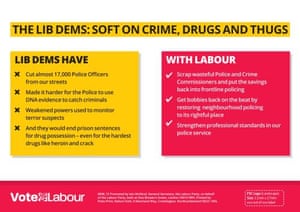
But if you are trying to woo voters who at the most recent general election voted for a liberal party, why on earth, 5 weeks out from polling day would you release this leaflet?
The Labour leaflet attacking the Lib Dems on crime.


I am particularly referring to the final bullet point on the "Lib Dems Have" side:

"And they would end prison sentences for drug posession - even for the hardest drugs like heroin and crack".

Now to me this just seems like a cynical attempt at vote grabbing. I suspect even those who drafted this leaflet know the current legal regime around drugs is self-defeating and damages the most vulnerable in society. But I think campaigning in this way is actually very misguided if you think about it.

Labour's best shot at being the largest party in parliament is by holding onto (and getting more of) those people who voted Lib Dem last time. Whatever else the Lib Dems have done, as a party their drugs policy is very clear. Indeed it is one of the most distinct "clear yellow water" issues between the Lib Dems and the two main parties. And many Lib Dems really, really like that policy. I know from personal experience having been one for several years. In all my discussions when I was a member on this subject (and that is a lot) I can count on one hand the number of Lib Dems I met who thought the current laws on drugs are right to stick with. This even applied to the older generations of Lib Dems in my experience.

So if anything, campaigning like this is likely to push wavering former Lib Dem voters back towards the yellows. Or at the very least make them hesitate when deciding whether to put their cross next to Labour. And let's not forget there are other options out there for voters too. The Greens also have a very progressive drugs policy and I am sure this will have pushed some who were going to vote Labour towards them too.

Labour should probably be grateful that this leaflet and the reaction to it in the media has largely been confined to online comment and articles in The Independent and The Guardian. Because the wider coverage this gets, the more likely I think it is to actually cost Labour votes.

They have fallen back on what they think is a "safe" issue to campaign on when in actual fact it is anything but for them given the current political situation.

Sunday, 24 August 2014

It's a disgrace that Alison Goldsworthy has had to leave the Lib Dems

Five years ago when I was a fairly new member of the Lib Dems I was trying to plan my time at my first ever Federal Conference in Bournemouth. I was a little nervous never having attended one of these before and as I was popping fringe events and hall debates into my schedule I realised that I hadn't been invited to anything on the Saturday night which was largely filled with various dinners for local parties and groups. I mentioned this on Twitter and almost immediately Alison Goldsworthy got in touch and insisted that I join her Welsh Lib Dem dinner on the Saturday evening. I pointed out that I am not (nor have never been) Welsh but she was having none of it. I went along and had a really good time being introduced to a number of different movers and shakers in the Welsh party all of whom made me feel very welcome. And despite the fact that I had never met Ali before that evening she treated me as if I was an old friend. I have never forgotten that kindness.

It was clear to me that she was phenomenally well connected within the party, even though she was (and still is) relatively young. She had already stood as a European candidate and was about to stand for a Westminster seat. She was clever, articulate and very funny. Exactly the sort of person you would expect a party like the Lib Dems would want representing them.

But Alison Goldsworthy is no longer a Lib Dem. She left the party in the last few days following the fallout from the Rennard scandal. Ali is one of the women who made allegations about inappropriate behaviour against the peer, allegations that have effectively come to nothing as he was reinstated.

Actually in Ali's case, if what she alleges is true, I would say "inappropriate behaviour" is a severe understatement:

She alleges that in 2004, when she was a 21-year-old candidate in the European elections, she posed for a group photo after a black tie event. She was stood next to Lord Rennard, then Lib Dem chief executive, and was wearing a long, backless dress.
She says that he put his hand down her gown and inside her knickers, past “extremely intimate” areas.
“There was no way it was an accident or that I had invited such an approach,” she claimed. “I couldn’t believe what had happened.”

It is an absolute disgrace that in this situation, Ali is the one who has been left with no choice but to leave the party she loves. In fact all four of the women who made allegations against Rennard which Alistair Webster QC found "broadly credible" have all now left the party.

This is utterly unacceptable. Whatever the Lib Dems think they have done in response to these allegations is nowhere near enough. If the party has any sense it will not consider the "matter is closed" as Rennard so menacingly suggested everyone now needs to do in a recent comment on Lib Dem Voice.

If they don't do something else they frankly deserve the opprobrium being heaped on them and Ali's parting comment that they no longer deserve to be taken seriously.

Friday, 6 June 2014

After next year the Lib Dems will be finished

I've hesitated for a while about writing this post but I feel that now I need to.


I think that after next year's election, the Lib Dems will be finished as a serious political force in this country.

It gives me no pleasure to write this but it is a reflection of the reality the party is now facing.

When I left the Lib Dems last November I did allude to some of the policies the party had enabled or allowed in government (e.g. secret courts) that I had been very unhappy with although my primary reason for leaving was more a general disillusionment with politics. But what was also becoming increasingly apparent to me was that the path the Lib Dems were continuing to take was doing them no favours. This has been crystalised in the last few weeks with the dreadful results in the local elections, the catastrophic result in the European elections and to top it off the party's candidate in Newark losing his deposit and coming sixth.

I know that in each of these cases there are defences that can be deployed. Parties of government always get a kicking mid term. The press is virulently anti-EU so of course being "the party of in" was always going to be a difficult sell. Newark was never likely to vote Lib Dem in significant numbers and smaller local parties always get squeezed out in by-elections. Etc. Etc. Etc.

But the excuses are wearing thin. very thin.

The Lib Dems are now facing an existential crisis. Parties like Labour and the Conservatives can take a "mid-term kicking" and even lose a couple of million (or more votes) between elections and it only reduce their parliamentary representation by maybe a third. But for an already small party like the Lib Dems, a loss on this scale could mean something close to wipeout.

We have already seen a taste of this in the European elections. I saw Lib Dem after Lib Dem both online and in other media express the view that the party would probably retain "a few" MEPs. The idea that they would lose all of them was not seriously entertained at least publicly. And yet the party only retained Catherine Bearder in the South East by 8,000 votes (I cast one of them). Catherine is now the only remaining Lib Dem MEP. For a party that prides itself on being the party of Europe this is utterly devastating.

The thing is that the polls all pointed to something like that happening, coming within a hair's breadth of total wipeout and yet the Lib Dem party leadership led their troops into battle on a broken prospectus with a leader who has lost all credibility.

It pains me to say this. I have met and spent time with Nick Clegg. He is a very nice man who showed personal kindness towards me. He was generous with his time despite the fact I am sure he had more important people to be speaking to. But the fact remains that he is now politically toxic. He is the punch-line to a thousand political jokes. In the same way as Tony Blair will forever be associated with Iraq, Clegg will forever be associated with the broken pledge on tuition fees. No matter what he says and does he lacks credibility.

During the first debate with Nigel Farage in the run up to the European elections he visibly deflated when asked about that subject. He must know in his heart of hearts that he will never escape it. He has tried toughing it out pointing out that the Lib Dems have introduced a fairer system than Labour. He has tried apologising. He has tried time and again to move on from it. Nothing has worked.

But it is not just Clegg. All Lib Dems who are members of the government are equally complicit in the compromises they have made, and therefore in the eyes of much of the electorate would be similarly poisonous were they to be elevated to the leadership in Clegg's stead.

I am not saying any of this is fair. It is not. I genuinely believe that the Lib Dems came into government at a time of crisis in the national interest and have tried very hard to ameliorate the policies of what would have been a fairly hard right government. But in doing so they have scorched their own earth. You only have to read through the voluminous comments on the many, many soul searching posts recently published on Lib Dem Voice to see how so many of the party's own activists fear this analysis is correct.

Small "l" liberals like me who wanted to see liberal policies like reform of our ridiculous drugs laws have seen things actually move in the opposite direction. Those on the left have seen the party execute what they perceive as a series of betrayals. Those on the right have seen the party thwart the sort of policies they would have liked to have seen. And those who pay very little attention to politics have been exposed to a low-level background drum-beat of a narrative that constantly criticises the party in general and Clegg in particular for all of this.

I cannot see how the Lib Dems can avoid something close to wipeout next year. Until recently I had thought that incumbency would save a decent number of the party's MPs. But at 6.7% nationally which is what the party just achieved in a national election they would be back to the days of fitting all their MPs into a phone box or worse. First past the post can easily deliver that sort of outcome.

And I can see a similar pattern of denial happening with regard to next year's elections that we saw with the Euros. Clegg still seems convinced that the party will ultimately reap the rewards of an improving economy. Even though he was convinced a couple of years ago that that would have happened a year or so before the election and even though the economy is clearly improving and the Conservatives are getting the benefit of that, the Lib Dems are not. Let me spell it out. They will not. The dynamic is all wrong. The Lib Dems are getting all of the blame and the Conservatives are getting all the credit.

The only hope for the party I fear is that the next parliament is not hung. Then they can retreat with whatever is left of their parliamentary party in the Commons and rebuild. Although that could take decades.

If there is another hung parliament and the party somehow manages to get enough MPs to form a coalition and they do so then the party will be dead within 5 or 10 years, whichever way they go and whatever they do. If they go in with the Tories they will just be seen as an adjunct of them. And if they go in with Labour they will be seen as unprincipled political gadflies who will do anything to get and keep power.

I mourn this. I am in favour of pluralistic government. I like seeing parties working together. But a combination of the history of the politics of this country, the crushing electoral system that is so unforgiving, the way the media splits everything into a binary choice and the mistakes the party has made in government mean that they will never get a fair hearing unless something fundamental changes.

It is now clear that Clegg will be leader for the 2015 general election. He has seen off his little local difficulty and got rid of Lord Oakeshott into the bargain. He is probably quietly pleased with that. But all that has done is deferred the day of reckoning. It is coming though and one way or another the most likely outcome in the short to medium term is that the Lib Dems will end up a small rump unable to influence very much or do anything of note, perhaps for many years, perhaps for ever.

Disraeli once said "England does not love coalitions". We are about to see that played out.

Saturday, 19 April 2014

Since 2010 the Government has been more popular than Labour

In 2010 something quite remarkable happened.

Two parties came together, they claimed in the national interest (although some would of course dispute that motive) to form a coalition in order to govern the country for the next 5 years.

It has been difficult for the Conservatives and Lib Dems. They haven't always agreed and there have been at time bitter arguments between them. However they have managed to remain in government together and nobody now seriously thinks that they will not last another year until polling day on May 7th 2015.

In the meantime, the Labour opposition have tried to find different ways to position themselves against the government. They have been quite inventive in this. They have referred to it as a "Tory led government" as they clearly think this is a good attack line. They have at times accused the Lib Dems of "betraying" their voters and also implied that this government has no mandate as nobody specifically elected the coalition. They have questioned the motives of ministers of both parties in the way they have implemented the cuts, claiming they are "ideological". They have berated the government for being heartless, out of touch, in the pocket of millionaires and many, many, many other such attacks.

This has been rather effective. Look:


Labour climbed ahead of the Tories in the polls a few months after the 2010 general election and apart from a slight blip a year or so later when the Tories briefly overtook them they have basically stayed ahead. The Lib Dems slid down to around 10% and have bumped around at that level ever since.

Surely based on this Labour is winning the argument and the public would prefer Labour then?

Well not quite actually. Look:


If we combine the totals of both the Conservatives and the Lib Dems, (i.e. the two parties of government) then that combined total has largely been ahead of Labour. There's a bit of crossover around the time and for a while after the "Omnishambles" budget of 2012. But for the majority of the time and certainly quite recently the "government" total has been ahead.

Of course the Conservatives and the Lib Dems are two separate parties. They won't be merging or standing on joint tickets, or even going for some sort of "coupon" agreement next year. They will stand separately. But Labour consistently attacks and berated the entire government. The pejorative term "ConDem" government is used to great effect in their campaigning. So if they are going to attack the entire government it is only fair to look at the figures in that context. And that shows us that despite the fact that for 4 years the government has had to make swingeing cuts and has launched unpopular reforms in all sorts of areas, they are still more popular than the Labour opposition.

If I was a Labour politician or activist I'd be very worried about this.

Tuesday, 15 April 2014

House of Comments - Episode 106 - The Miller Tale

Episode 106 of the House of Comments podcast "The Miller Tale" is out. This week I am joined by Labour PPC Jessica Asato and Lib Dem commentator Mark Pack to discuss the fallout from the Maria Miller resignation, power and harassment in politics and they address the question: "What are the Lib Dems for?".

You can subscribe to the podcast on iTunes here.

Other podcasting software e.g. for Android can be pointed here to subscribe.

You can download the mp3 for the latest episode directly from here.

Or you can listen to the embedded episode below here:


Any feedback welcomed in the comments below.


PS: A big thanks to Audioboo for hosting the podcast for us. We would also like to thank Kevin MacLeod from Incompetech.com for our theme music.

Sunday, 2 February 2014

5 things I learned as an activist for a political party

I left the Lib Dems last year after having been a member and activist for just over 5 years. I learned a lot during that time and I think much of it would apply to other parties too.

Such as


1) It costs money

And I don't just means the party membership fees. There are raffles, fund raising events, dinners etc. all of which seek to raise funds for the local party. My local party did not have many active members so the burden for all of this fell disproportionately on those of us who were active. I know there was one member in particular, a stalwart of the party who donated significant amounts of their own money to help keep things going.

But there's more. I stood as a candidate in a council by-election in 2010 and that cost money too in petrol travelling back and forth all over the ward over several weeks as well as on other unexpected things such as buying special chemical hand warmers to stop my hands from seizing up knocking on so many doors!

I'm not saying it cost a huge amount of money but I have a decent job and my own car. For those without those advantages I imagine it would be even harder.

And what's really irritating about this is that...


2) Lots of people seem to think everyone involved in politics is doing it for the money

In the aforementioned by-election one of the things I heard time and again on the doorstep was that politicians are all on the make. As this was being directed at me as a "representative of politics" I felt duty-bound to rebut this claim. I'm not sure how successful it was because as I was trying to get elected to the borough council there seemed to be a residual suspicion that it was in order to get the money. It certainly was not why I was doing it. For a start I knew I had virtually no chance of winning as this is a safe Tory area. But what it did was make me sympathise very much with those activists, especially for the smaller parties who slog their guts out for years and in some cases decades with very little prospect of winning seats. I did it for a relatively short period and it increased my respect for all activists.


3) It's like being a part of a large extended family

Going to party conference (and I think I ended up going to about 7 of them in total in my 5 years) was a very nice experience. There are lots of friendly faces and you know that if you strike up a conversation with someone in a fringe meeting or around the venue you are likely (although not guaranteed!) to share some core political values. As time went on and I got to know more and more people in the party there would come a point when simply wandering around for 5 minutes I would bump into people I knew and often go for a drink or a bite to eat in a completely impromptu way.

Having spent the first 34 years of my life as not a member of any party this was a new and welcome experience. It is the thing I am probably going to miss the most now I am no longer a member.


4) It's pretty damn hard to get on the approved candidate's list for parliament

So having been obsessed with politics since I was about 16 years old and having fairly quickly established myself as a successful political blogger (winning the Best New Lib Dem Blog of the Year in September 2009) I perhaps somewhat arrogantly thought I had what it took to get on the approved list and have a tilt at being a candidate for parliament somewhere (unwinnable) in 2010.

So I applied to go for the half day assessment at Cowley Street and dutifully toddled along expecting that my many years of watching BBC Question Time and reading political opinion pieces would stand me in very good stead.

I could not really have been more wrong.

To be fair to myself I was pretty good at the media task but given I was being asked to respond to the previous week's pre-budget statement by Alistair Darling and I had actually been on Sky News two days before doing exactly that it would have been pretty surprising if I had not been good at it. Of course media skills are an important part of what a candidate needs to be able to do but frankly much more important, certainly in getting elected are the other tasks that I was set such as an "in tray exercise" where you have to decide how to respond to a number of different scenarios as a candidate or a group exercise where I had to role-play within a team (involving some of the other candidates) as if I was on a council committee. Not to mention the "policy and values in action" exam where I had to interpret party policy through the prism of my experience and explain how I would put it into action.

I was pretty bad at these tasks but particularly in the in-tray exercise. I had a very long debriefing with the chap who oversaw the whole process after I failed to get onto the approved list and it was clear that most of my answers were simply plain wrong. In my (partial) defence I had never been in a council meeting or had to deal with any of the scenarios as a candidate so I simply applied my world experience from running my own company etc. It's pretty clear there are a specific set of skills that have to be learned.

And on a final personal note it was also clear to me that...


5) It is very unlikely I would ever have achieved elected office in any capacity

For a couple of reasons.

Firstly I am interested in national politics. When I stood in the by-election I did enjoy talking to people when I was canvassing but only really when it strayed into national issues which as a council candidate I probably should have been steering away from to talk about speed-bumps and dog mess. Which frankly do not really float my boat. And in order to make any headway in getting to a position where I could have had a shot at anything at a national level I'd have had to spend years doing the local stuff, trying to get elected and learning the ropes of everything I had got so wrong during the candidate vetting session.

Secondly I simply do not have the patience to spend thousands of hours of my time doing all of that work over years and years. I have a huge amount of respect for the people who can and do do this but I am now certain I am not one of them. I have a wife, a job, business interests, friends and family (spread all over the country) and various hobbies. There is just not space personally for me to do all of the things that would have been necessary to make headway in the world of elected politics.


As I said in my piece when I left the Lib Dems I am still passionately interested in politics but I have other priorities in my life at the moment and am happy outside of a party. That may change in the future and I may join the fray again some day but it is very likely to be a smaller party or campaigning group and my focus would be on the issues that matter most to me.

I learned a lot in my 5 and bit years as a Lib Dem and for anyone interested in politics I would definitely advise them to join a party and see how you get on. You may well find it suits you better than I ultimately did.

Tuesday, 19 November 2013

House of Comments - Episode 85 - Leaving the Lib Dems

Episode 85 of the House of Comments podcast "Leaving the Lib Dems" is out. Myself and Emma are joined by co-editor of Lib Dem Voice Caron Lindsay to discuss how politics works with respect to my decision to leave the Lib Dems, Tory web history deletion shenanigans and the Ed Balls "Nightmare" e-mail.

You can subscribe to the podcast on iTunes here.

Other podcasting software e.g. for Android can be pointed here to subscribe.

You can download the mp3 for the latest episode directly from here.

Or you can listen to the embedded episode below here:


Any feedback welcomed in the comments below.


PS: A big thanks to Audioboo for hosting the podcast for us. We would also like to thank Kevin MacLeod from Incompetech.com for our theme music.

Friday, 15 November 2013

Why I am leaving the Lib Dems - AKA This is not a Flounce

I have decided to leave the Lib Dems.

This is something that has probably been creeping up for a while. There have been a number of things that the party has done in government that I have not been happy with, although it is not really any one of those things that has triggered this.

I should probably start by saying what this is not. It is not a flounce off where I have a massive go at the party. It has been and will continue to be extraordinarily difficult being in government for a minor party and this would be equally true if the coalition was with Labour. The Lib Dems get a huge amount of blame. Their poll ratings have dropped by two thirds. Much of the criticism they endure is of the tenor of “HOW COULD THEY DO THIS IT IS A BETRAYAL?!” which usually fails to even recognise that coalition is always a compromise. I very rarely however hear any criticism that focuses on how the person attacking them thinks they have made the wrong compromises, it is almost always the fact they have made any compromises at all. Such attacks seem to want things to go back to the “good old days” of Red vs Blue with the Yellows on the side lines being ignored and/or laughed at. I do not envy the task that the party has faced and I am far from sure I could have done any better were I in Clegg’s (or any other minister’s) shoes. Indeed I expect I would have done worse. There are political traps everywhere laid by those who want binary politics back.

And actually the above paragraph is really where my disillusionment has come from. Of course I wasn’t happy with secret courts, in fact I was furious. The removal of the spare room subsidy is just mean spirited and ultimately self-defeating. Tuition fees were an absolute mess. Cutting the 50p rate may have been economically sensible but was politically idiotic. I could probably come up with dozens more things that I have not supported. But it is not really any of these, as I said government is tough and there is plenty from the Lib Dem manifesto that has ended up in government.

The impetus for me to leave is really because politics is broken. The Westminster Village is obsessed with who managed to shout the best for 5 minutes and get their friends to jeer and point at the other side just after midday on a Wednesday. They genuinely seem to think it matters. I very rarely even bother watching PMQs any more. They insist on speaking in sound bites and clichés and point-blank refuse to answer questions thinking that their “clever” evasions can’t be seen for precisely what they are. The tribal nature of much of what goes on drives me nuts. Labour have been the worst for this in recent years castigating the current government for doing things that they would almost certainly have done themselves and in a number of cases were actively planning to. But none of the main parties are free from this sort of thing. It reduces politics to a bunch of silly games where tiny nuances are picked up on and there are a million hidden rules that only highly experienced practitioners of the “art” of politics are aware of. That’s one of the reason so many of them are now former SpAds. It is only by immersing yourself in this culture for decades that you can learn these rules. People who may have spent most of their lives doing something else much more worthwhile aren’t aware of them and thus struggle to become part of the inner circles of real power being seen as ingénues who have little to offer. Sarah Woolaston, a woman who spent most of her life as a doctor is an excellent example of this.

None of this is specifically the fault of the Lib Dems. But they are complicit in it. They have 57 MPs. They are part of the government. They have tried to change some of this but on the constitutional and political reform front they have utterly failed. Again I am not blaming them particularly. The forces of conservatism in Labour and the Tories closed ranks to ensure AV (what would have been a very minor, positive change) was a failure and they killed Lords reform too. Those who sneer that the Lib Dems are to blame themselves for all of this fail to recognise just how far the status quo will go to preserve itself.

I joined the Lib Dems over 5 years ago in the hope that I could be part of something that would advance electoral reform, move the government’s drugs policy in a positive direction and improve civil liberties. On the first two we are further away than we were when I joined*. The third one has been a case of two steps forward in some areas (e.g. ID cards) but two steps back in others (e.g. secret courts).

I have become convinced that real change needs to come from outside of the three main parties now. I’m not calling for a Brand-esque revolution or telling people they shouldn’t vote. That was totally irresponsible. I will certainly be voting at the next election and I may well vote for the Lib Dems. I have been interested in some of what the Green Party has to say although some of their more statist policies turn me off. I am also interested in the nascent Pirate Party philosophy. But the truth is I have had enough of being a member of a party for now. I only joined at the age of 34 having spent the previous two decades as a highly politically engaged lone wolf. Perhaps that is my natural state.

I think that love them or loathe them groups like 38 Degrees and the TPA have shown how much outside groups can influence things. The power of political parties is waning. The financial crisis has shown the limits of business as usual and yet nothing his really changed yet. We have a political system that was designed hundreds of years ago and it is utterly unfit for the world we now live in. But I see and hear very few people agitating for the sort of fundamental change we need. And I include myself in that criticism. I have on occasion bemoaned one or other aspect of it but being a member of one of the main parties, attending the conferences, speaking on the media as a member, posting leaflets, canvassing for them and generally doing all that a good party member should has made it difficult for me to say what I really think and has ultimately become untenable for me.

When the Occupy movement started a couple of years ago I was absolutely disgusted at the response of most people involved in politics at all levels. Although the movement was somewhat incoherent it was raising incredibly important questions. But all I seemed to hear was how they were disturbing people’s peace and USING IPHONES THE HYPOCRITCAL IDIOTS!!!!!11111 Occupy didn’t have all the answers but they were an example of just how disillusioned people have become.

I don’t know how politics will look in 30 or 50 years time but I feel sure that with technological change and the mistrust that we now see in almost all of our institutions it will ultimately be radically different. I desperately want to see a more responsive, representative, evidence based and tolerant politics. I have just reluctantly come to the conclusion that remaining a member of one of the main parties will not help us get there.

I will miss attending the conferences and being part of a strong movement with very deep roots. I have made some good friends in the party and I hope to keep in touch with them all. I expect some will be disappointed that I have not chosen to continue to fight the good fight from inside but I hope they will understand my reasons.

I intend to keep blogging on here, writing in other places (if they’ll still have me) and podcasting. I also intend to keep popping up on the media as and when I can although I expect I’ll be less of a draw now I’m not in one of the main camps.

But most of all I fully intend to try and help nudge us towards the better sort of politics that I fervently believe we as a country deserve.


*This is not to denigrate the excellent work done by Ewan Hoyle and others within Lib Dems for Drug Policy Reform. The party's policy on drugs is very good, it's just that almost none of it has ended up in a change to government policy.

Monday, 21 October 2013

House of Comments - Episode 81 - The Calculus of Differentiation

Episode 81 of the House of Comments podcast "The Calculus of Differentiation" is out. Myself and Emma are joined by Lib Dem blogger Jennie Rigg to discuss the Lib Dems on Free Schools and policy differentiation in general, Plebgategategate, rendition and Labour's pay day lender tax policy.

You can subscribe to the podcast on iTunes here.

Other podcasting software e.g. for Android can be pointed here to subscribe.

You can download the mp3 for the latest episode directly from here.

Or you can listen to the embedded episode below here:


Any feedback welcomed in the comments below.


PS: A big thanks to Audioboo for hosting the podcast for us. We would also like to thank Kevin MacLeod from Incompetech.com for our theme music.

Friday, 20 September 2013

The universality question

The announcement at Lib Dem conference that all infants in state primary schools will get free school meals is an interesting one.

Firstly the party leadership clearly thinks it will be popular and they are probably right. Secondly it's a distinctive policy that the party can point to to say "this would not have happened without us". It's almost certainly impossible to measure the benefits of such a policy in cost terms mainly because the benefits will likely be in ways that cannot be measured very easily or quickly such as improved concentration and long term health outcomes. That in itself feels rather liberal and open minded.

You knew it was coming though.

But.

The problem is that this policy is universal. All infants at public schools will get free meals. That includes children of multi-millionaires. It includes Frank Lampard's 5 year old daughter as Nick Ferrari pointed out to Nick Clegg on LBC this morning.

Now I think a good case can be made for a policy like this being qualitatively different from some other benefits that are applied universally. The fact it is children receiving it, who are generally too young to make informed decisions about what they eat is a big one. Also the fact that children eat together and the cultural separation that the current system of some children having free meals and others whose parents pay for them imposes at an age when difference is often pounced upon in peer groups is a very important factor.

But the Lib Dems need to be very careful. Because this level of nuance was sometimes lacking in some of the previous discussions about e.g. pensioner benefits. Those who argue for maintaining other universal benefits that the Lib Dems are seeking to abolish have just been handed a powerful argument that could if not handled correctly make the yellows look hypocritical.

All Lib Dems put up to talk about this need to be hyper-aware of this potential problem and be ready to deploy quick and convincing arguments why this case is different.

Tuesday, 17 September 2013

How First Past the Post could save the Lib Dems in 2015

We Lib Dems really dislike First Past the Post.

A post, yesterday

In fact I'd even go so far as to say that we hate it.

We hate the distorting effect it has on our politics. We hate the way its ossifying influence helps to keep the red/blue duopoly of our system. We hate the way it keeps smaller parties (not just ourselves but e.g. Greens and UKIP) out of power or even in some cases parliament altogether.

So I think it's fair to say we are generally not fans. And yet in 2015 the First Past the Post electoral system for Westminster could perversely be the thing that saves us. Let me explain how.

The Lib Dems got 23% of the vote in 2010 but only just over 8% of the seats (which meant 57 seats). As unfair as this is (and I regularly bang on about this as regular readers and listeners to my podcast will know) the reason is because the majority of that 23% of votes were wasted. When I say wasted I mean they were cast in seats where we didn't get an MP. In other words our vote was not very efficiently distributed given how seats are actually won.

But because of the way FPTP is structured we don't need to get 23% in order to return 57 MPs. In fact theoretically we could get way less than 23% and still hold all our existing seats. We could even get less than 8% of the vote and get 57 seats.

With 650 seats up for grabs the way to be certain of getting 57 seats is to make sure you get 50% of the vote in 57 of them. In reality you can often win seats on less (in some cases much less) than 50% but for illustrative purposes let's assume that's what we want to do. So if each seat has 1/650th of the voters we can see that the percentage of votes we theoretically need is actually

(100 x (57/650)) / 2

Or around 4.4% of the vote.

Of course this assumes an absolutely perfect distribution of our vote, i.e. getting exactly the votes we need (50% each) in the seats we are targeting and zero votes everywhere. In reality this would never happen. But what this demonstrates is that FPTP is almost infinitely elastic in the lack of correspondence between number of votes cast and number of seats.*

It doesn't take a massive leap from this to see that if the Lib Dems are very smart and target their resources with ruthless efficiency they have a reasonable chance of retaining most of their seats. When combined with the incumbency factor that many Lib Dems are expert at using to their advantage it becomes a potent scenario. The casualties of this of course would be all those candidates running in all the other non-target seats. If we follow this through to its logical conclusion then in order for this strategy to work they would get next to no or perhaps actually no help. We could see a large number of lost deposits. But I suspect the leadership would see this as a small price to pay if they get to retain a solid number of MPs.

Come 2015 I suspect the Lib Dems will get more than the 8% - 10% we are currently seeing in the polls. It will probably be into the teens perhaps around 15% in my view. But even if it isn't and it actually ends up being 10% or even lower, First Past the Post offers us plenty of scope for gaming the system to return us far more MPs than a simple "Universal Swing" analysis would suggest.

The only question really is whether the party leadership is ruthless enough to follow such a strategy and thus use the invidious and rightly despised First Past the Post system to its full advantage.


*As an aside here consider that UKIP could get 10% or even 15% of the votes and would still likely get zero seats because their vote is quite evenly distributed across the country which is an absolute killer for political parties under FPTP.

Tuesday, 18 June 2013

House of Comments - Episode 63 - Making the Grade

Episode 63 of the House of Comments podcast "Making the Grade" was recorded and released on Sunday. This week myself and Emma Burnell are joined by Conservative activist and blogger Nick Denys to discuss Michael Gove's education reforms, The Morrissey Report into the Lib Dems in the wake of the Lord Rennard allegations and Sarah Wollaston's interview with the Guardian about how having won an open primary to become MP for Totnes, the political system has treated her.

You can subscribe to the podcast on iTunes here.

Other podcasting software e.g. for Android can be pointed here to subscribe.

You can download the mp3 for the latest episode directly from here.

Or you can listen to the embedded episode below here:


If you are a political blogger and wish to be considered as a future guest please drop me an e-mail at markreckons@live.co.uk.

Any feedback welcomed in the comments below.


PS: A big thanks to Audioboo for hosting the podcast for us and especially to Audioboo's James O'Malley who has helped us out getting relaunched. James is also editor of The Pod Delusion podcast which is about "interesting things" and is well worth a listen too! We would also like to thank Kevin MacLeod from Incompetech.com for our theme music.

Friday, 24 May 2013

The real lessons from the 2010 coalition negotiations


I've just finished reading Andrew Adonis’s 5 Days in May: The Coalition and Beyond and it has given me food for thought both about how the 2010 coalition negotiations proceeded and what lessons we might learn for any potential future coalition discussions.

Having already read David Laws’s 22 Days in May and Rob Wilson’s 5 Days to Power and having watched various radio and TV programmes about the 2010 negotiations, I already had a reasonable idea about how they went. But it was interesting to get a Labour perspective on the talks.

The fairly settled view from Lib Dems is that Labour were unprepared for discussions and some members of their negotiating team and parliamentary party seemed to be mentally ready for opposition, rather than seriously trying to make the necessary compromises to stay in power.

One figure, however, in all the accounts that I have seen, heard and read, who clearly did want to try and make the negotiations work was Gordon Brown. There is no doubt in my mind that he really did want to see a Lab-Lib coalition. Unfortunately, because he had not properly prepared the ground for any such discussions, having been so used both as Chancellor and PM to working majorities, he was destined to fail. The passion with which Brown tried to make the discussions with the Lib Dems work comes across in Adonis’s book as almost tragic, but given how much we already know about what a tribalist was, he cuts a contradictory figure, desperately trying to convince Nick Clegg of how a radical Labour-Lib Dem coalition could deliver.

A telling vignette from 5 Days in May is how Peter Mandelson, Ed Miliband and Ed Balls all discussed with Adonis how they had never come across Andrew Stunell before and did not know who he was. He had been Lib Dem MP for Hazel Grove since 1997 and a frontbench spokesperson for almost all of that time. This demonstrates a shocking level of engagement by Labour with the party that they were supposedly attempting, in good faith, to form a government with.

An important theme from the Adonis book is that of how the question of 'the numbers' seemed to be eminently solvable in the view of Brown and some other senior Labour people. Despite the fact that Labour only had 258 seats and the Lib Dems 57 (so a total of 315 vs the Tories' 306, with a majority requiring 326) Brown was convinced that most of the minor parties would fall into line. I’m not sure if I would describe this as wishful thinking or self-delusion but the idea that a 'rainbow coalition' or even a minority coalition that took the votes of the SNP, Plaid Cymru, Caroline Lucas, the SDLP and the DUP all pretty much for granted would have been plain sailing, and was somehow an obvious and equal choice to the stability of a solid working majority with the Conservatives, is optimistic in the extreme.

It also suggested to me a level of arrogance, perhaps fostered by 13 years in government, within senior Labour ranks that the minor parties would come to heel. The Lib Dems were doing the responsible thing in not assuming that all these smaller parties would stay in line and instead considering that any deal with Labour would be on the basis of a minority government which would have been very difficult to control. This was not least because a number of Labour MPs spent the five days of the coalition negotiations making it clear that there were things they would not agree to or vote for. So far from Brown being sure of being able to deliver his 258 MPs, it was far more likely that the total would regularly fall short of that depending on which issue the vote was on.

A good example of this is how during the first formal discussion with the Labour team, Adonis highlighted how Labour was open to a proportional representation option being on the AV ballot paper. But I know from my own personal discussions at the time that Labour MP Tom Harris would never have voted for a bill that included a PR option in the referendum. He told me categorically. It was also clear to me that he was not alone in this respect and there were a number of Labour MPs who would also have defied party whips to defeat this. Labour was negotiating on something it would never have been able to deliver on.

So what lessons can we draw from the various accounts of the 2010 coalition negotiations? I would say the most important thing is preparation. Both the Lib Dems and the Conservatives wargamed a number of scenarios before the 2010 election. They approached coalition negotiations professionally and with the clear purpose of forming a stable government that could last for a whole parliament. Contrast this with Labour, which didn't even start seriously planning for coalition until after the result was announced. And it made a big difference. The Lib Dems did not take Labour as seriously as the Conservatives as potential partners, not for ideological reasons (as Adonis seems convinced of), but primarily because the reds had not done the basic groundwork. So the key lesson from 2010 for Labour is to be open to the possibility that there will be a hung parliament in 2015, long before it actually happens, and to plan, war-game and prepare in advance for this outcome. Even just making sure the basics, such as having enough backchannel communication between key players. Happily, there are signs that Ed Miliband gets this now and is preparing the ground for just such an eventuality.

Another important factor is to be realistic about what can be achieved. Brown's offer of PR on the AV referendum ballot simply could not have been delivered by him in the circumstances he found himself in. Indeed the numbers made any alliance at all very tricky. If the maths makes things difficult, parties should be open about this. That is the only way that good faith can be maintained.

The final lesson to draw for now is more related to how the current coalition has played out. The Lib Dems have been reasonably disciplined in keeping their troops in line and ensuring that most items from the coalition agreement have gone through, even when, as in the case of tuition fees, they have gone directly against what the party wanted. Whatever you may think of the individual policies, this has been done in the name of coalition cohesion. By contrast, the Conservative backbenches have been much more restive and have forced defeats on measures such as Lords reform in defiance of their party leadership.

The various processes that the Lib Dems had (and have) in place to facilitate buy-in from the parliamentary and wider membership were seen by both Labour and Conservatives in 2010 as somewhat eccentric. Indeed, one of the reasons Brown found it so hard to get hold of Clegg on several occasions during the five days is because the Lib Dem leader was in one meeting or another keeping colleagues closely informed of what was happening and consulting them. But it is hard to argue that the legitimacy those processes conferred on the coalition from a Lib Dem perspective is anything other than a very good thing. I was one of the party members who voted in the special conference convened towards the end of May 2010 and it certainly gave me a feeling of ownership which has been sorely tested over the last three years. It is not a panacea and we enter a grey area when measures that were never in the coalition agreement are legislated on, sometimes to the chagrin of myself and my fellow party members. But a complete lack of any such process within the Conservative Party has led to a widespread feeling amongs its members, both in parliament and more widely, of a lack of legitimacy in the current coalition.

There was no modern precedent on which the parties could draw three years ago and they were, to an extent, flying blind. But in 2015, should such discussions become necessary, that will not be the case. All parties should learn the lessons from those five heady days in May 2010.


This piece was first published online in The New Statesman.


We discussed the Adonis book and the lessons for future negotiations on this week's House of Comments Podcast which guest starred Hopi Sen.